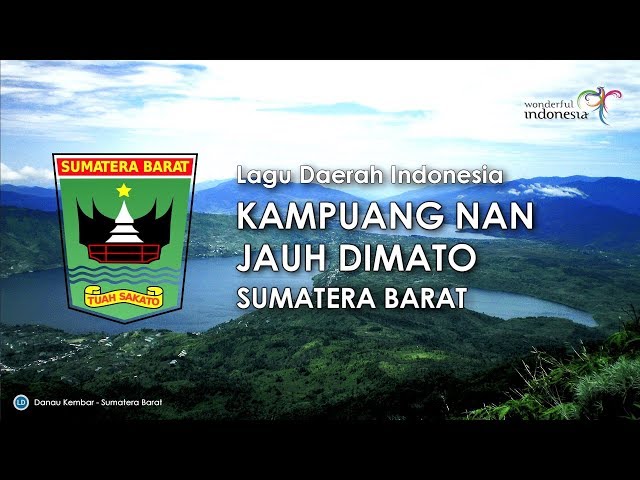

Discover the English translation, basic chords, and the profound meaning of the Minangkabau migration (merantau) culture. Uncover the historical truth about its creator!
Table of Contents
The Definitive Guide to West Sumatra’s Nostalgic Anthem: Kampuang Nan Jauh Di Mato
As we navigate through the year 2026, the wave of urbanization continues to surge, yet there is one cultural phenomenon that remains timeless for the Minangkabau people: the tradition of merantau (migrating or wandering to seek knowledge and fortune). If you were to ask what the ultimate soundtrack is for those yearning for their homeland, the undisputed answer is Kampuang Nan Jauh Di Mato. This song is more than a mere arrangement of melodies; it is an emotional portrait that captures the scent of damp soil after the rain in the Minang realm, the sound of children playing bamboo flutes, and the warmth of friendly neighbors. Dissecting this song is like opening a love letter from a wanderer to their mother and their hometown.
History & Fact-Checking the Composer
This song was born from the womb of the Minangkabau tradition, heavily influenced by the philosophy: Karatau madang di hulu, babuah babungo alun. Merantau bujang dahulu, di rumah baguno alun (A young man should wander to seek knowledge and wealth before he can be of true use to his hometown).
Crucial Historical Fact-Correction
As a cultural fact-checker, I frequently encounter a fatal historical error spread across hundreds of internet articles and even some academic papers. Many carelessly state: “The song Kampuang Nan Jauh Di Mato was composed by Oslan Husein in 1931.”
Let us apply historical logic and biographical data: Oslan Husein was a legendary Indonesian actor and singer born in Padang. However, he was born on April 8, 1931. It is a biological impossibility for a newborn baby to compose a musical masterpiece.
The true fact, as recorded in Indonesian musicological archives, is that this is an oral folk song (NN/Traditional) passed down through generations. The song then exploded in popularity across the archipelago when it was performed by Oslan Husein (along with the Orkes Teruna Ria) and legendary singer Elly Kasim during the 1950s and 1960s. Understanding this distinction is vital so we do not pass down fabricated history to the next generation.
Lyrics & English Translation
The lyrics of this song utilize simple yet highly poetic Minangkabau language. Here are the original lyrics alongside their English translation to help international audiences feel its nostalgic depth:
Kampuang nan jauh di mato
My hometown that is far away from my sight
Gunuang banyak bakuliliang
Surrounded by many majestic mountains
Takana jo kawan, kawan lamo
I remember my friends, my old childhood friends
Sangkek basuliang-suliang
From the times we used to play the bamboo flutes together

Panduduaknya nan elok
Its people are so kind-hearted
Nan suko bagotong royong
Who love to work together and help one another
Kok susah samo-samo diraso
When times are hard, we feel the burden together
Den takana jo kampuang
I am deeply reminded of my hometown

Takana jo kampuang
Remembering my hometown
Induak ayah adiak sadonyo
My mother, father, little siblings, and everyone
Raso maimbau-imbau den pulang
I feel as if they are calling me to come home
Den takana jo kampuang
I am deeply reminded of my hometown
Musical Guide & Basic Chords (Musicianship)
This song is typically performed in a 4/4 time signature with a Moderato (moderate) tempo. The rhythm features a light swing characteristic of Malay/Minang music, giving it a profound sense of nostalgia without sounding overly sorrowful. It sounds exceptionally beautiful when accompanied by an acoustic guitar, a saluang (Minang bamboo flute), or an accordion.
For those who wish to play it on the guitar, here are the basic chords in the key of G Major (G = Do):
[Verse 1]
G
Kampuang nan jauh di mato
C                   G
Gunuang banyak bakuliliang
G
Takana jo kawan, kawan lamo
D                  G
Sangkek basuliang suliang

[Verse 2]
G
Panduduaknya nan elok
C                  G
Nan suko bagotong royong
G
Kok susah samo samo diraso
D                  G
Den takana jo kampuang

[Chorus]
C
Takana jo kampuang
G
Induak ayah adiak sadonyo
D
Raso maimbau-imbau den pulang
C         D        G
Den takana jo kampuang
Frequently Asked Questions (FAQ)
1. What is the main moral message of the song?
The song conveys the message that no matter how far a person travels or migrates (merantau), they should never forget their roots, the kindness of their village community, and the family that always awaits their return.
2. Who is Oslan Husein, and why is he associated with this song?
Oslan Husein was a legendary Indonesian actor and musician from Padang who brought this song to national fame in the 1950s and 1960s. He is not the original creator (despite popular myths), but rather the iconic figure who immortalized this traditional tune in modern Indonesian pop culture.
3. What does the phrase “sangkek basuliang-suliang” mean?
This phrase beautifully depicts pure and happy childhood memories. In rural Minangkabau villages, children would often spend their time sitting together and playing traditional bamboo wind instruments (suling or saluang).
Conclusion & Recommendations
Kampuang Nan Jauh Di Mato is not just a song; it is a monument of longing for millions of Minang wanderers scattered across the globe. Its lyrics, which glorify the beauty of nature and the spirit of communal harmony (gotong royong), teach us that the true wealth of a nation lies in togetherness and the love of family. If you are currently far from home, play this song, and let your heart “return” for a moment.
References:
- Encyclopedia of Indonesian Music, Ministry of Education, Culture, Research, and Technology (Kemdikbudristek).
- Indonesian Music History Archives & Biography of Oslan Husein (Born 1931 – Died 1972).
- Minangkabau Cultural Information Portal regarding oral literature (folk songs) and the merantau philosophy.
