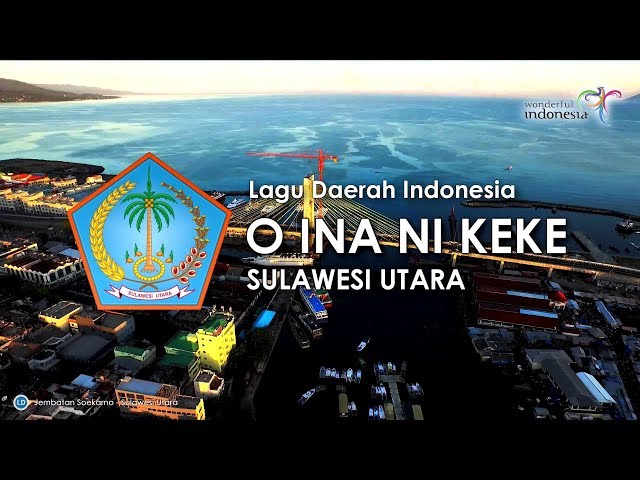

Discover the complete English translation, basic chords, and the profound family meaning behind the Minahasan folk song O Ina Ni Keke. Uncover its true creator!
Table of Contents
The Definitive Guide to North Sulawesi’s Heartwarming Anthem: O Ina Ni Keke
Amidst the fast-paced modernization of 2026, the longing for the warmth of family often calls us back home. If you step into the “Land of Waving Palm Trees” (Sulawesi Utara/North Sulawesi), there is one melancholic yet sweet melody that never fails to pluck at your heartstrings: O Ina Ni Keke. This song presents a deeply grounded portrait of life—a simple dialogue between a mother and her beloved daughter. However, beneath its straightforward lyrics lies a profound message about love, family values, and a gentle warning about the importance of valuing time. Dissecting this song is like reopening an old photo album filled with sweet childhood memories.
History & Fact-Checking the Composer
The song O Ina Ni Keke is a traditional folk song that has lived within the oral traditions of the Minahasan people for generations. Literally, “Ina” means mother, and “Keke” is an affectionate term for a Minahasan girl.
Crucial Historical Fact-Correction
As a cultural fact-checker, I must address a rather fatal piece of misinformation that has spread across several modern internet portals. Many articles mistakenly claim that the song O Ina Ni Keke was composed by R.C. Hardjosubroto in the 1950s.
Let us apply historical and ethnomusicological logic: R.C. Hardjosubroto was a legendary composer of Javanese gamelan music (karawitan), born and raised in Java (famous for masterpieces like Gambang Suling and Gundhul-Gundhul Pacul). It is historically and geographically illogical to claim that a Javanese gamelan maestro suddenly composed a traditional Minahasan song using a local North Sulawesi dialect that had existed long before the modern recording era.
Based on local academic literature and cultural arts journals, this song is officially classified as an NN (Anonymous/Traditional) work. Correcting this history is our responsibility so that we do not carelessly mix up the cultural heritage of different ethnic groups.
Philosophically, the lyrics tell the story of a child asking her mother, who has just returned from the town of Wenang (the old name for Manado city), for a traditional cake (waleko). Unfortunately, the child asks too late, and the cakes are already gone. Behind this simple dialogue lies a moral lesson: a warning not to waste opportunities, and a reminder that parental love is not always manifested in material things, but in the effort and journey they take for their children.
Complete Lyrics & English Translation
This song is presented as a sweet, interactive dialogue. Here are the original lyrics alongside their English translation:
O ina ni Keke mangewisako
Oh, mother of Keke, where are you going?
Mange aki Wenang tumeles waleko
I am going to Wenang (Manado) to buy waleko (traditional cakes)

O ina ni Keke mangewisako
Oh, mother of Keke, where are you going?
Mange aki Wenang tumeles waleko
I am going to Wenang (Manado) to buy waleko (traditional cakes)

Weane, weane, weane toyo
Give me, give me, give me a little bit
Daimo siapa kotare makiwe
There is no more left, you are only asking for it now

Weane, weane, weane toyo
Give me, give me, give me a little bit
Daimo siapa kotare makiwe
There is no more left, you are only asking for it now
Musical Guide & Basic Chords (Musicianship)
O Ina Ni Keke features a highly beautiful melody—slightly melancholic but ending on a very sweet note. It is sung in a 4/4 time signature at a Moderato (moderate) tempo. It is perfectly suited to be accompanied by gentle acoustic guitar fingerpicking or the traditional Minahasan kolintang wooden percussion instrument.
Here is the Basic Chord Guide (in the key of C Major / C = Do) which is very easy to learn:
[Verse 1]
C
O ina ni Keke mangewisako
C                 G         C
Mange aki Wenang tumeles waleko
C
O ina ni Keke mangewisako
C                 G         C
Mange aki Wenang tumeles waleko

[Verse 2]
F                  C
Weane, weane, weane toyo
G                            C
Daimo siapa kotare makiwe
F                  C
Weane, weane, weane toyo
G                            C
Daimo siapa kotare makiwe
Frequently Asked Questions (FAQ)
1. What does the word “Keke” actually mean?
Among the Minahasan people, “Keke” is not a specific given name. It is a term of endearment or an affectionate nickname used for a daughter or a young girl. (Conversely, the term of endearment for a boy is usually “Utu”).
2. Where is the town of “Wenang” mentioned in the song?
Wenang is the original or ancient name for the city of Manado before it developed into the modern administrative capital of North Sulawesi that we know today.
3. What is the moral message behind the lyric “Daimo siapa kotare makiwe”?
This sentence, which means “There is no more left, you are only asking for it now,” serves as a gentle proverb encouraging us to be prompt and proactive. In life, if we want something or love someone, we should express it and ask for it at the right time. Opportunities that arise rarely wait for those who are slow to act.
Conclusion & Recommendations
The song O Ina Ni Keke reflects just how rich Indonesia’s local wisdom is in capturing everyday life. Through a simple conversation about a piece of cake, the Minahasan ancestors successfully passed down a song laden with the values of family warmth, togetherness, and the importance of timely action. Singing this song takes us back to the timeless, warm embrace of a mother.
Read Also (Other North Sulawesi Traditional Songs):
- Si Patokaan (Traditional)
- Poco-Poco (Arie Wibowo – Regional Pop)
- Esa Mokan (Traditional)
